How a Photovoltaic System Works: A Complete, Step-by-Step Guide to Understanding It Once and For All
Discover, in a simple and didactic way, how a photovoltaic system works. Understand the flow of solar energy step by step, from the panel to your home, and see how the technology generates savings on your electricity bill.
FUNDAMENTOS
Vinicius Harteman Pena
5 min read
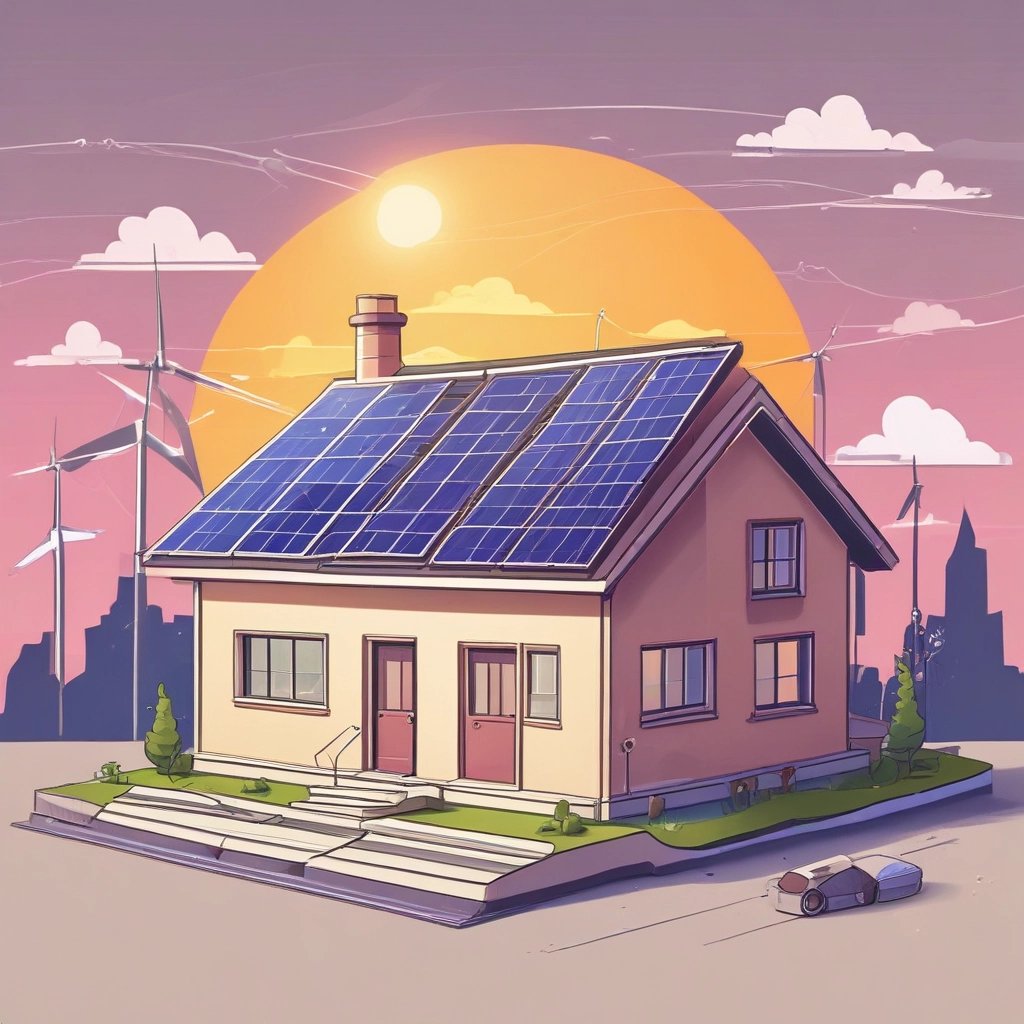
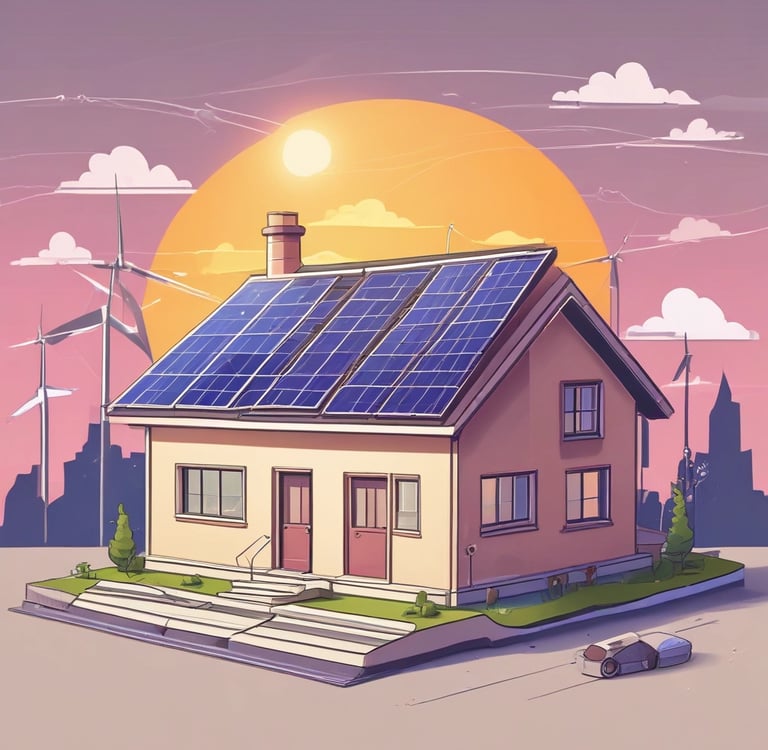
How a Photovoltaic System Works
Published in 12/03/2025
If you've made it this far, it's because at some point you've been curious to know how a photovoltaic system works, right? After all, it's not every day that you find a technology capable of transforming sunlight into real savings on your electricity bill.
Yes, despite seeming highly technical, the truth is that the process is much simpler (and more fascinating) than many people imagine.
In today's guide, you'll understand step-by-step, in the simplest way possible, how the system works — from the moment the sun hits the panel until the energy reaches your appliances.
So pull up a chair, grab your coffee, and let's get started!
What is a photovoltaic system?
Before diving into the step-by-step process, we need to understand what makes up a photovoltaic solar system.
And here's a mini spoiler: it's made up of several pieces of equipment that work together like a team — each with its own function, but all with the same goal: to generate clean energy for your everyday use.
The main components are:
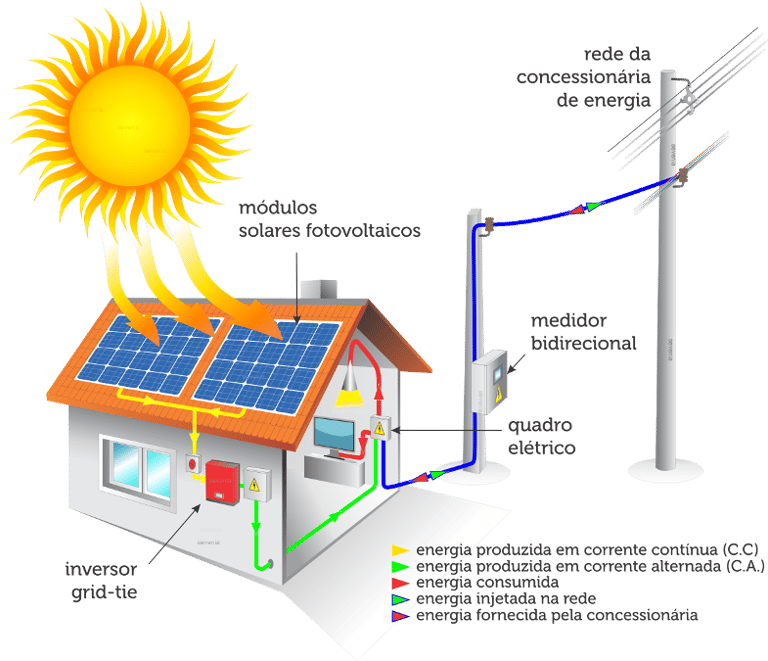
Solar modules (panels) – They capture sunlight and generate electricity.
solar inverter – It converts energy into the format used in your home.
Fixing structures – They support the panels on the roof or ground.
Cables and connectors – they make up all the electrical connections in the system.
Protection panel – ensures safety against surges and failures.
Bidirectional meter – records both energy consumed and energy produced.
Simple, right? Now let's see how all this works in practice.
The sun reaches the solar panels.
It all begins in the most obvious place: sunlight.
Solar panels have cells made of silicon, a semiconductor material that reacts when photons (particles of light) reach it.
This phenomenon is called the photovoltaic effect.
When this happens:
Electrons begin to move.
An electric current is generated.
Direct current (DC) emerges.
This is the first form of energy produced by the system — still raw, not yet usable.
Quick Tip:
The greater the solar incidence, the more energy is produced. That's why the orientation, tilt, and shading of the panels are so important.
The solar inverter converts DC to AC
The energy coming from the panels is not compatible with your home's appliances.
It needs to be converted to alternating current (AC), the same standard as wall outlets.
That's where the main protagonist of the story comes in: the solar inverter.
it:
Converts DC to AC
Monitors generation in real time.
It protects the system against failures.
It communicates data to the app or online platform.
Adjusts operation based on power grid conditions.
In other words, besides converting energy, it's a sort of brain for the system.
There are three main types:
String inverter
Microinverters
Optimized (a hybrid between both)
Each has its advantages — but that's a topic for an entire article (I can write about it later if you'd like!).
Solar energy powers your home.
After being converted by the inverter, the energy goes to the electrical panel in your home.
From then on, everything works exactly like with the utility company's power supply:
refrigerator
television
air conditioning
lighting
computer
washing machine
All of this can be powered by energy generated on the roof.
Here's a cool fact:
➡ Solar energy is always used first.
The utility company's grid only kicks in when there isn't enough generation at the moment.
The surplus goes to the network and becomes credits
If your system is producing more energy than you are consuming at that moment, nothing is wasted.
The surplus is automatically sent to the utility company's grid.
Even better: this becomes an energy credit, according to the rules of the Compensation System (Law 14.300/2022).
These credits:
They can be used at night
valid for up to 60 months
They can offset consumption from other units (depending on the type of plan)
They help to drastically reduce the monthly bill
This means that even when the system is not generating (such as at night), you still "benefit" from the energy produced during the day.
At night, you use the network + credits.
Since the system does not generate energy at night, consumption then comes from the electrical grid.
However, credits accumulated during the day (or previous days) are used to offset this usage.
The goal is simple:
➡ The final energy bill should be as low as possible.
And where do batteries fit into this process?
Many people think that solar systems need batteries.
But the truth is that, in Brazil, on-grid residential systems don't need them.
Batteries are used when:
You want complete network autonomy
needs power in isolated locations
Find a backup to protect against frequent outages
wishes to operate as a hybrid system
But for those connected to the utility company, energy credits already fulfill this "storage" function very well.
Understanding the complete workflow in a simple way
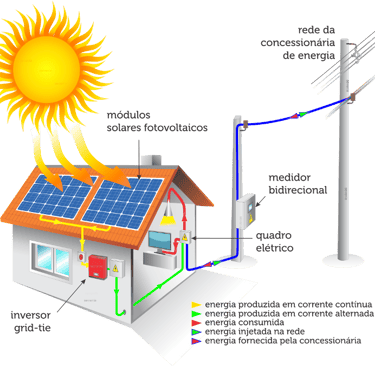
Here's a summary of the energy journey:
Sun→ Panels: CC power is generated
Panels → Inverter: CC becomes AC
Inverter → Electrical panel: your house consumes
Surplus → Network: becomes credit
Night/clouds → Network + credits
Where can a photovoltaic system be installed?
Almost anywhere:
✔ Residences
Roofs, slabs, or even structures in the ground.
✔ commerce
Supermarkets, stores, bakeries, warehouses, and offices.
✔ Rural areas
Sites, farms, water pumps, irrigation, production sheds.
✔ Horizontal and vertical condominiums
For both common areas and individual units (shared distribution).
What matters most is:
solar incidence
available space
absence of shading
suitable structure
Maintenance: What do you really need to do?
One of the biggest advantages of solar energy is its low maintenance.
It is generally necessary:
Cleaning the panels (1 to 2 times a year)
Checking the cables and connections.
Monitoring generation via the app
Well-installed systems can operate for more than 25 years with high efficiency.
And how much can be saved with solar energy?
This is the part everyone loves.
Depending on consumption and system size, savings can reach:
➡ 80% to 95% of the electricity bill
Furthermore:
the property appreciates
operating costs fall
financial predictability increases
You reduce your dependence on rates that only go up.
In many cases, the system pays for itself in 3 to 6 years — and continues generating energy for decades.
Why is solar energy so beneficial for the planet?
Why is it:
100% renewable
Silent
Emissions-free
It does not cause significant environmental impact.
It reduces the need for polluting sources (such as thermal power plants).
Each solar system installed helps to reduce tons of CO₂ emissions over its lifespan.
Conclusion
Now you truly understand how a photovoltaic system works.
While solar energy may have seemed complicated before, now you know exactly how it all works — from the first ray of sunshine to savings on your electricity bill.
With panels capturing energy, a smart inverter converting it all, and a credit system helping you at night, photovoltaic technology has become one of the most efficient, sustainable, and economical ways to generate energy.
You may also like
Partner
For those looking to install solar energy safely and with specialized technical support, we recommend A.L. Pena Energia Solar, a company that operates in the photovoltaic sector offering customized projects for homes, businesses, and rural properties.
Telephone
+55 16 99648-9008
© 2025. All rights reserved.